
Kidney Cancer
The primary function of our kidneys is to filter our blood. Masses (growths or tumours) can form inside our kidneys at times. Some of these tumours are cancerous, but the majority are not. You must have your mass examined to determine whether it is cancerous or not.
There are numerous treatment options available. If your cancer is detected early, you may have even more options. Your medical team is available to assist you. They can assist you in learning more about the benefits and drawbacks of various treatments. More information about kidney cancer and the steps you can take if a mass forms in your body can be found here.
One in every four kidney masses is benign. Smaller masses have a higher chance of being benign. Cancer is more likely in larger masses. Some tumours grow slowly, while others grow quickly and aggressively. Tumours that are aggressive can form, grow, and spread quickly.
The majority of kidney tumours (about 40%) are small, localised masses. Localised means that the tumour has not spread from its original location.
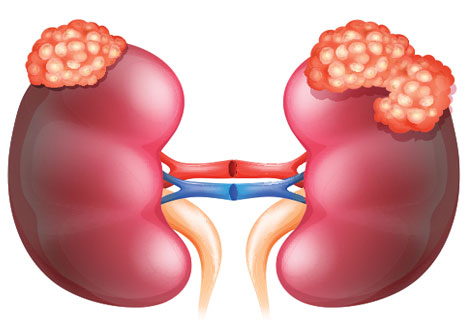
Types of Kidney Cancer
Tumours are classified into three types:
Renal cell carcinomas (RCC) :
Renal cell carcinomas (RCC) are cancers of the kidney. These are the most common types of cancerous kidney tumours. They are found in the main substance of the kidney, where filtering takes place. RCC can develop as a single tumour within a kidney or as two or more tumours within the same kidney.
Clear cell renal cell carcinoma( subtype of RCC ) :
The most common type of kidney cancer is clear cell renal cell carcinoma, also known as ccRCC or conventional renal cell carcinoma. The tumour is called clear cell renal cell carcinoma because of how it appears under a microscope. The tumour cells appear clear, like bubbles.In adults, ccRCC accounts for roughly 80% of all cases of renal cell carcinoma. Adults are more likely than children to develop ccRCC. Renal cell carcinoma accounts for 2% to 6% of all cases of kidney cancer in children and young adults."
Rare types of kidney cancer
Rare kidney cancers most commonly affect children, teenagers, and young adults.
PRCC stands for papillary renal cell carcinoma.
- 15% of all cases of renal cell carcinoma
- A tumour (or tumours) in the kidney tubes
- Type 1 PRCC is more common and grows at a slower rate.
- Type 2 PRCC is more aggressive and grows faster.
TRCC (translocation renal cell carcinoma)
- It is responsible for 1% to 5% of all renal cell carcinomas and 20% of childhood cancers.
- Tumor(s) found in the kidney
- TRCC usually grows slowly and without symptoms in children.
- TRCC is aggressive and rapidly growing in adults.
Benign (non-cancerous) kidney tumors
Noncancerous kidney tumours grow in size but do not spread to other parts of the body and are usually not fatal. The most common treatment is surgical removal, and most tumours return.
A papillary renal adenoma is a type of renal adenoma.
- The most prevalent benign kidney tumour.
- Tumours are small, slow-growing masses that frequently go undetected.
- Oncocytoma is usually discovered by chance during an imaging test for another reason.
- Tumours begin in the cells of the kidney collecting ducts and can grow in either kidney.
- Tumours can grow to be quite large around the These tumours can grow to be quite large, ranging from just over an inch (walnut) to 4 inches (grapefruit).
Angiomyolipoma
- Overgrowth of blood vessel and smooth muscle tissue cells can also cause benign fatty tumours.
- Tumours are not cancerous, but they can grow to be quite large and destroy nearby tissue.
- Tumours larger than an inch and a half in diameter can cause internal bleeding.
Signs and symptoms
Most people have no signs or symptoms in the early stages. Kidney cancer is typically discovered by chance during an abdominal (belly) imaging test for another reason. As the tumour grows, you may experience:
- Urine with blood
- Backache in the lower back
- A lump in the lower back or along the side of the waist
- Weight loss that is not explained, night sweats, fever, or fatigue
Risk Factors of Kidney Cancer
A risk factor is anything that increases the likelihood of contracting a disease. Some risk factors can be modified (for example, smoking), but others cannot (for example, your gender or family history). Having a risk factor, or even several risk factors, does not guarantee that you will develop kidney cancer, but it does raise your chances.
Kidney cancer risk factors include:
- Smoking
- Obesity (being overweight)
- Blood pressure that is too high
- Gender - approximately twice as many men as women develop kidney cancer.
- Being on dialysis for severe chronic kidney disease
- Family members suffering from kidney cancer
- Long-term use of pain killers.
- Von Hippel-Lindau disease, Birt Hogge Dube syndrome, and other rare genetic diseases
- Long-term asbestos or cadmium exposure history
You may be able to reduce your risk of developing kidney cancer by avoiding risk factors that are under your control. Stopping smoking, for example, may reduce the risk, as may controlling body weight and high blood pressure.
Related Treatment

There are several types of head and neck malignancies, including those of the brain, eyes, spine, salivary gland, thyroid, sinuses, mouth, throat (pharynx),
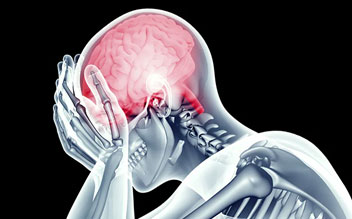
Brain tumors account for one of every 100 malignancies diagnosed in the United States each year. Most malignant brain tumors and brain cancers
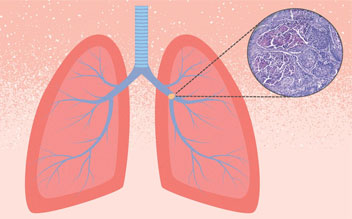
Cancer develops when cells alter (mutate) and expand out of control. The aberrant (changed) cells frequently develop into a lump or mass known as a tumor.
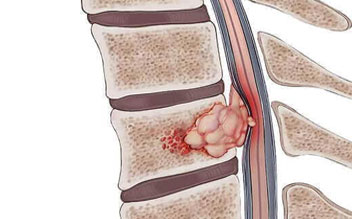
Spinal cancer is caused by abnormal cell growth in the tissues that make up the spine (including the spinal canal and vertebrae), resulting in the formation
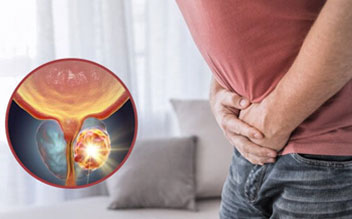
Prostate cancer is the most common type of cancer in men, but it is highly treatable when detected early. It all starts with the prostate gland..
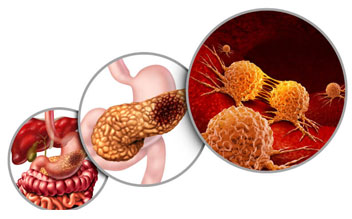
Pancreatic cancer is a type of cancer that starts with cell growth in the pancreas. The pancreas is located behind the stomach's lower portion.
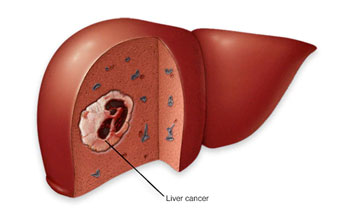
Primary liver cancer is a type of cancer that begins in the liver. There are several types: Hepatocellular carcinoma (HCC) or hepatoma

Breast cancer is the most common cancer in women in India, and it is the second leading cause of death in women, after lung cancer.
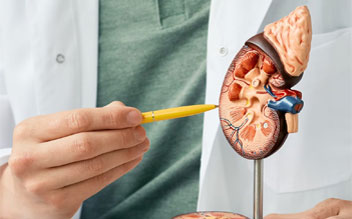
The primary function of our kidneys is to filter our blood. Masses (growths or tumours) can form inside our kidneys at times.